Last updated:
Solar panel repair in Birmingham starts with one question: which part has stopped working? A system that shows nothing on the inverter screen, trips the breaker or makes far less than it used to has a fault somewhere between the panels and your consumer unit. Once that part is found, you only pay to fix what is broken.
Most homes find out from the bill or the monitoring app. Generation drops to nothing on a bright day, or the summer figures look like last winter’s. Sometimes the inverter shows a red light or an error code. We work on systems we did not fit, so it doesn’t matter who installed yours or whether they are still trading.
Common solar faults and what they look like
Inverter faults
The inverter turns the panels’ DC power into the AC power your home uses, and it is the part most likely to wear out. The Energy Saving Trust says an inverter needs replacing after around 12 years, while the panels should last 25 years or more. A blank screen, a fault light that won’t clear or an error code that keeps coming back usually points here. When the inverter itself has failed, solar inverter replacement is often the cheapest way to get generating again.
Isolators
Every system has isolator switches so it can be made safe for work. A DC isolator that has let in water, or has a loose connection inside, can fail and cut the system off. It can also overheat. A switch that is discoloured, cracked or warm to the touch needs looking at soon.
Connectors and cables
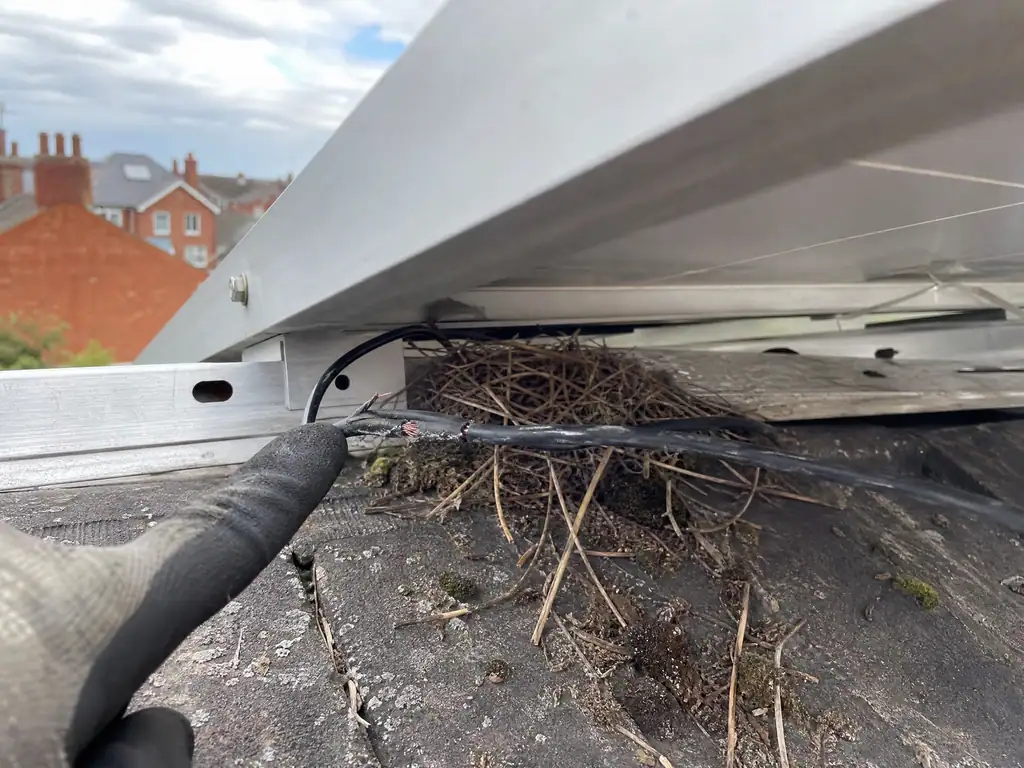
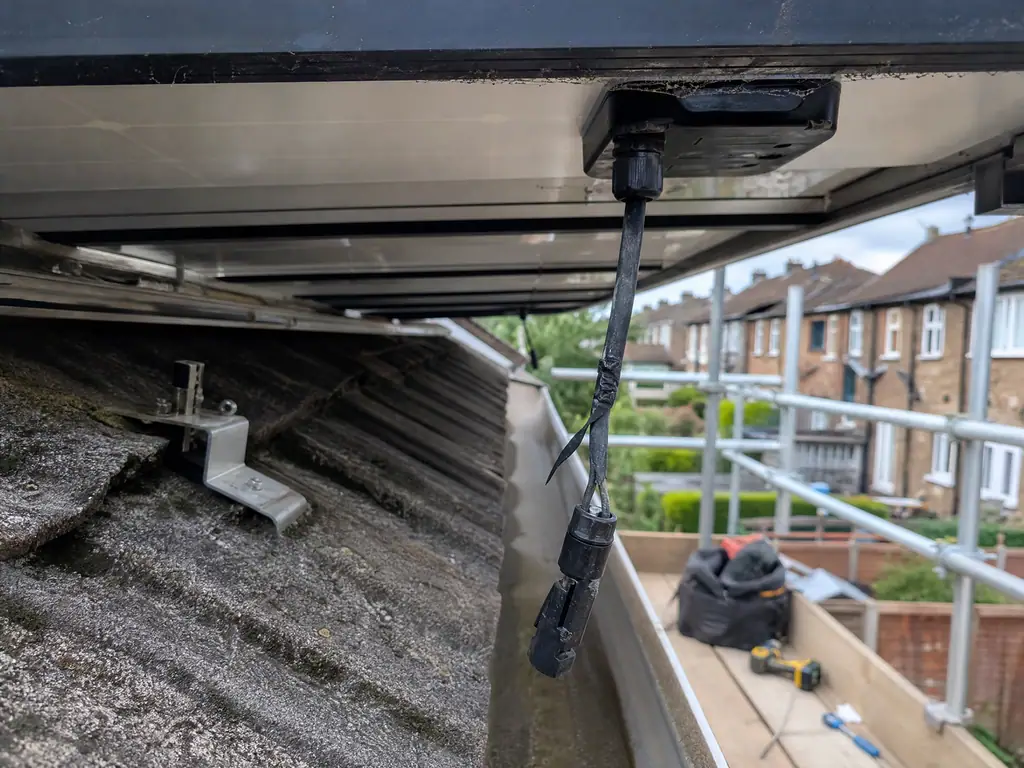
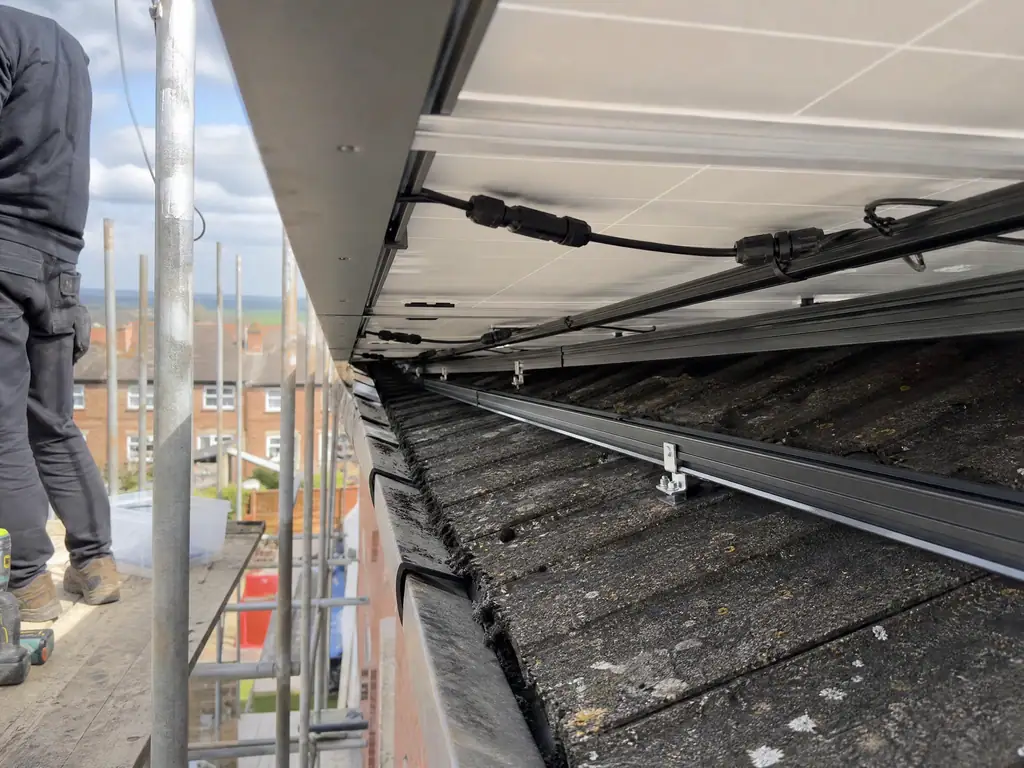
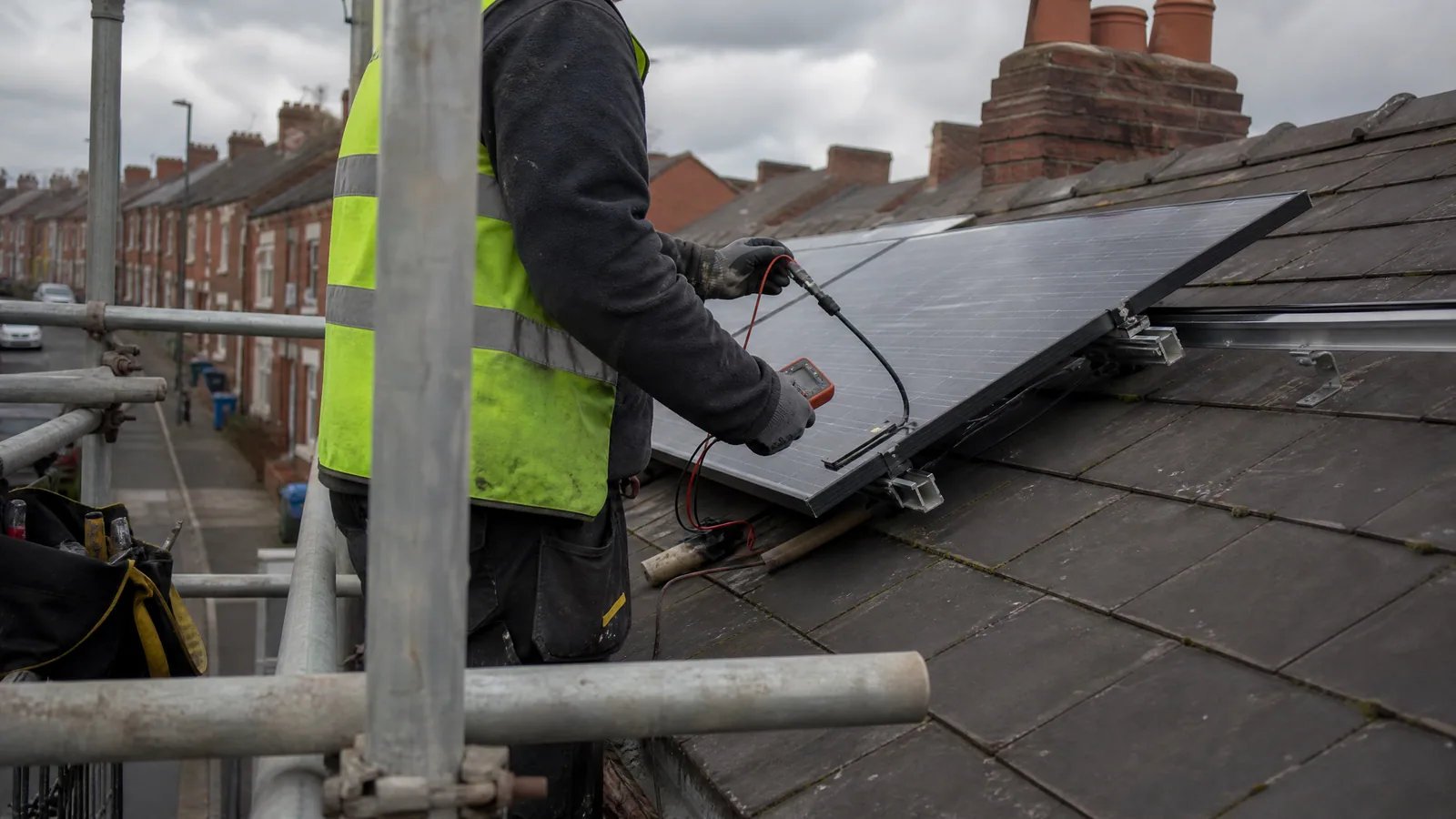
Panels are linked by MC4 connectors and cable runs across the roof and down into the house. A connector that was not fully made up, or a cable chewed by rodents or rubbed through, can take a whole string of panels offline. These faults show up when string voltages are measured.
Birds, dirt and shading
Pigeons nesting under the array can damage cables and leave the panels coated. Solar panel bird proofing keeps them out once the nest is cleared. Heavy grime and moss cut output too, although the Energy Saving Trust says rain keeps panels clean if they are tilted at 15 degrees or more, which most pitched roofs are. New shading from a tree or an extension is not a fault, but it can look like one.
How much should your system be making?
A drop in output is only a fault if the system is making less than it should. PVGIS, the European Commission’s solar model, gives a south-facing Birmingham roof about 969 kWh a year for every kWp of panels, at a 35 degree pitch. An east or west-facing roof makes about 777 kWh per kWp. So a 4 kWp system facing south should produce roughly 3,900 kWh in a normal year.
The seasons matter just as much. PVGIS puts a Birmingham kWp at about 119 kWh in July and 34 kWh in December, so a low winter reading is normal. A July that looks like a December is not. If your figures are well below these, there is probably something to find.
What a repair visit involves
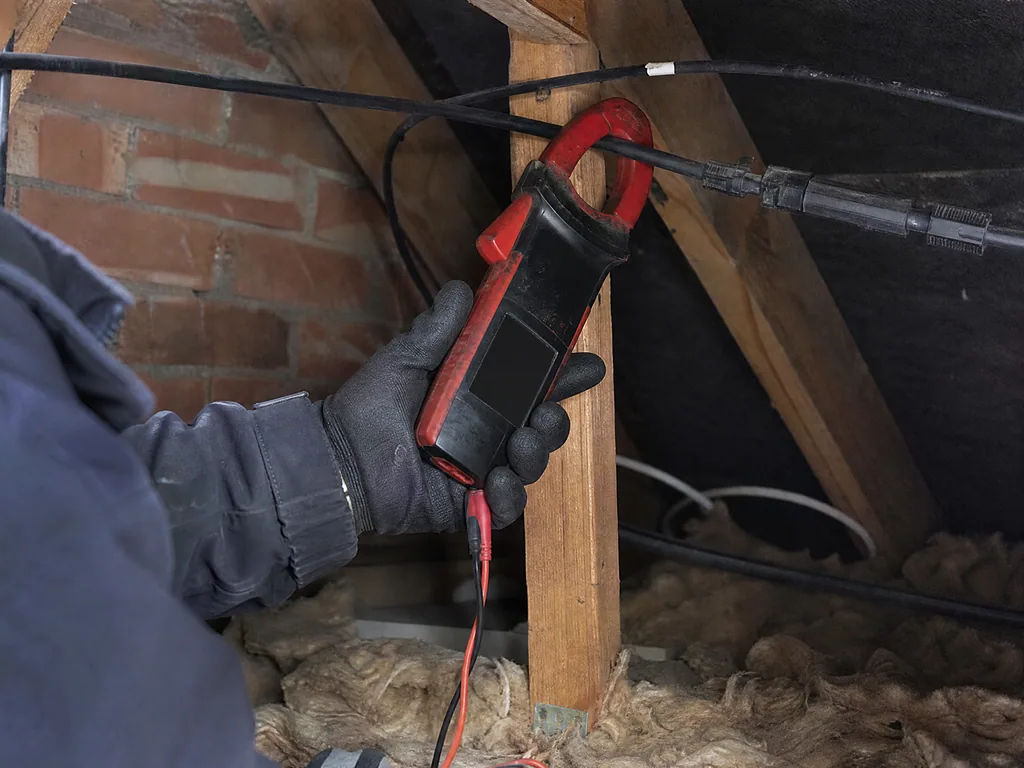
The visit starts at the inverter: the screen, the error history and the lights. Then the AC side is checked back to the consumer unit, and the DC side is checked from the isolators up to the strings of panels. Measuring each string’s voltage and current shows whether panels, connectors or cables have dropped out. An insulation resistance test finds cable damage that you can’t see from the loft or the ground.
Once the failed part is found, you get a free quote for the repair before any work starts. Some repairs are done the same visit if the part is to hand. Others need an inverter or a panel ordering in. After the repair, the system is tested and restarted, and you get the readings so you can see it is back to where it should be. Solar panel maintenance covers the same checks as a routine service, before anything fails.
When replacement makes more sense than repair
Panels rarely all fail at once. A single cracked or burnt-out panel can be swapped for one with matching electrical ratings, and the rest of the array keeps working. An inverter is different. On a system more than about 12 years old, a like-for-like replacement can be the moment to fit a hybrid inverter, which is ready for a battery later. Adding a battery to existing solar panels explains how that works if you are still on a Feed-in Tariff.
If you are buying a house with panels that don’t work, get the system checked before you exchange. Buying a house with solar panels lists what to ask for.
Before you call
Check the consumer unit first. If the solar circuit breaker has tripped, reset it once. If it trips again, leave it off. Don’t open the inverter, touch the DC cables or go on the roof. If there is a burning smell, smoke or scorch marks, keep everyone away and call 999. Then write down the error code and roughly how old the system is. Why are my solar panels not working? runs through the common symptoms in order.
What's included
- Inverter screen, error codes and fault history read
- Generation checked against what the system should make for its size and roof
- DC isolators checked for heat damage and water
- Reachable MC4 connectors and cable runs inspected
- String voltage and current measured
- Insulation resistance tested on the DC side
- The fault explained in plain English, with the repair priced before work starts
- System tested and restarted after the repair
How the options compare
Up-front cost
- Leave it
- Nothing now
- Replace the whole system
- The price of a whole new system
- Find and fix the fault
- The repair, priced after the fault is found
Generation
- Leave it
- Lost every day the system is off
- Replace the whole system
- Back once the new system is fitted
- Find and fix the fault
- Back once the fault is fixed
Working panels
- Leave it
- Kept but idle
- Replace the whole system
- Scrapped with the rest
- Find and fix the fault
- Kept
What you learn
- Leave it
- Nothing
- Replace the whole system
- Little about why the old one failed
- Find and fix the fault
- Which part failed and why
Paperwork
- Leave it
- None
- Replace the whole system
- New certificates
- Find and fix the fault
- Written findings and test results