Skip to content

Solar Battery Storage in Birmingham

Eco Solar Panel Installation Company fits solar battery storage across Birmingham and the West Midlands, alongside new panels or added to a system you already have. The battery is sized from your actual electricity use, and the quote is free.

Lines open Monday to Sunday, 9am to 7pm.

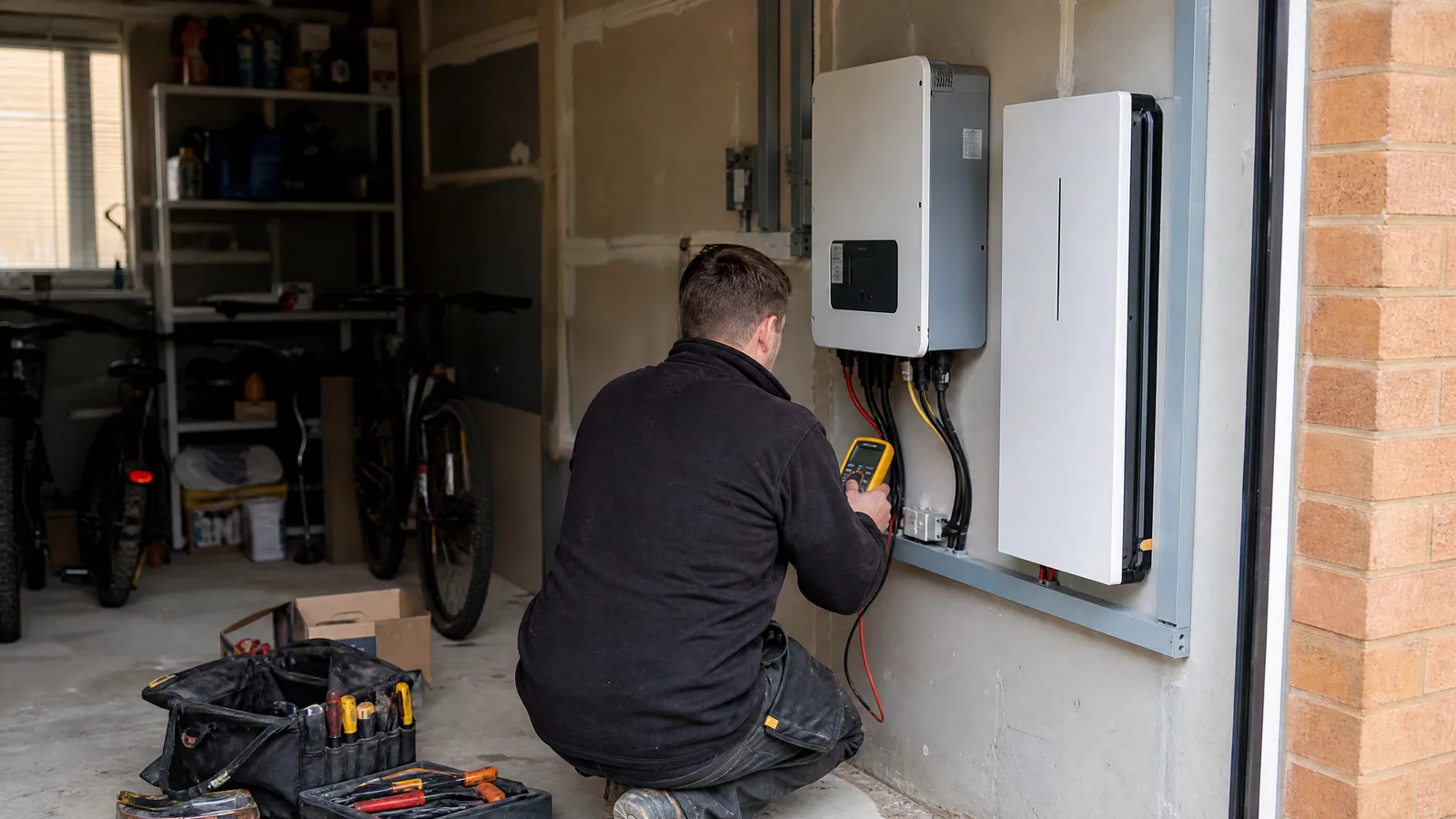
Electrician testing a home solar battery and inverter mounted on a garage wall in Birmingham

Last updated:

Solar battery storage in Birmingham lets you keep the power your panels make during the day and use it after dark. Without a battery, anything you don’t use at the moment it is generated goes out to the grid. With one, it is stored and used in the evening, when most homes use the most electricity.

The size of battery that makes sense depends on your household, not your roof. A family that is out at work and school all day uses most of its power in the evening, so a battery earns its keep. A household that is at home in the daytime already uses much of its solar as it is made, so a battery adds less.

How much a battery costs

The Energy Saving Trust puts home battery prices between £1,500 and £10,000, with a 5 kWh system at around £4,600. Checkatrade lists Birmingham battery installs at £4,240 to £7,207, with an average of £5,503. The Energy Saving Trust also says you should save money by fitting a battery at the same time as solar panels, because the electrician’s time and some of the equipment are shared.

Home installation is zero-rated for VAT until 31 March 2027 under HMRC’s rules for energy-saving materials. Solar Energy UK says batteries fitted with solar qualify, and that home batteries installed on their own should be zero-rated too. The cost guide puts battery prices next to panel prices.

How big a battery should be

Battery capacity is measured in kilowatt hours. The Energy Saving Trust says a typical home system might be 10 kWh. The right figure for you comes from how much electricity you use between late afternoon and the next morning. A recent bill, or the half-hourly figures from a smart meter, is enough to work it out.

Season matters too. PVGIS puts a 4 kWp south-facing system in Birmingham at about 476 kWh in July and 136 kWh in December. In summer a battery fills easily. In winter, the panels may not produce enough surplus to fill a large one, which is why the biggest battery available is rarely the best value. The solar panel calculator includes a battery option so you can see the difference.

Batteries with new panels or on their own

If you are fitting panels, the neatest route is a hybrid inverter, which handles both the panels and the battery in one box. If you already have panels, the battery can usually be added on the AC side without touching what is on the roof. Adding a battery to existing solar panels covers that job, and does adding a battery affect your Feed-in Tariff? covers older systems still paid under the scheme.

A battery can also be fitted without solar panels at all, charging from a cheaper overnight tariff. That can suit flats and homes where the roof isn’t suitable. Every battery connected to the grid has to be registered with National Grid Electricity Distribution, under the same G98 and G99 rules as solar panels.

Where the battery goes

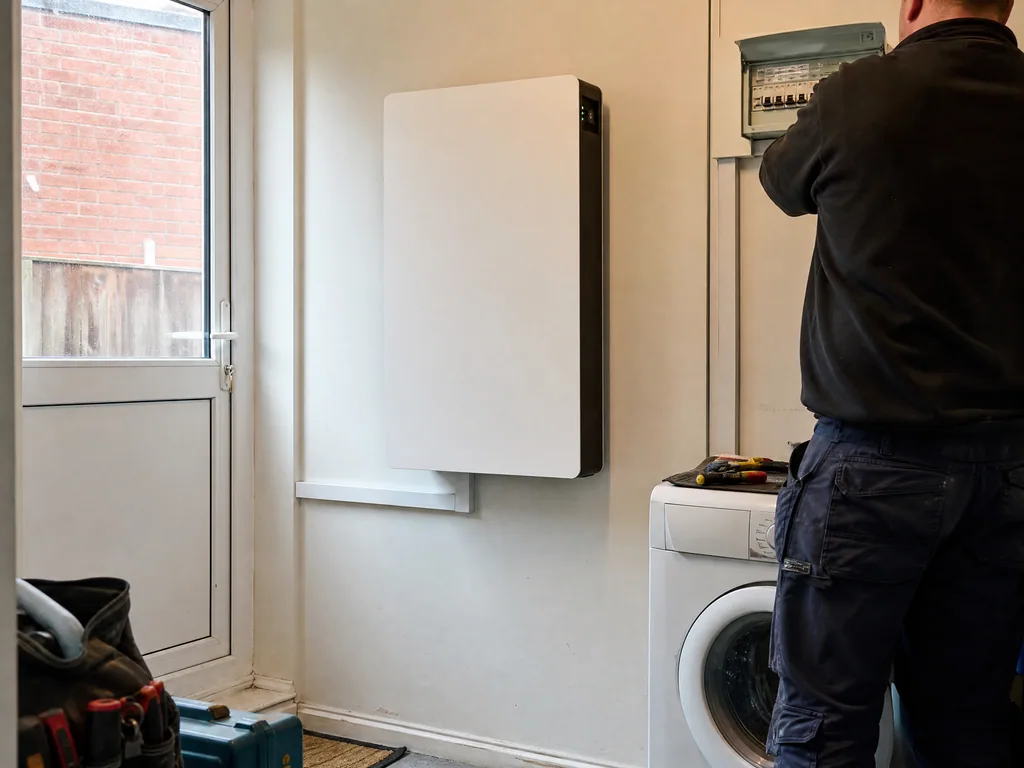
The Energy Saving Trust describes a typical battery as about 100 by 60 by 25 centimetres, a little taller and wider than a washing machine but much less deep. Most go in a garage, utility room or cupboard, close enough to the consumer unit to keep the cable run short. The survey agrees the location before anything is ordered.

If you are also thinking about an electric car, plan the two together. EV charger installation explains how a charger can share the same spare solar.

What's included

  • A look at your electricity use, from bills or smart meter data
  • A check of your existing inverter and meter, if you already have panels
  • Battery size recommended from your evening and overnight use
  • A site for the battery agreed with you, indoors or in a garage
  • Installation and wiring to your consumer unit
  • Monitoring app set up and explained
  • Registration with National Grid Electricity Distribution
  • System tested, with the settings explained before we leave

How the options compare

Evening power

No battery
Bought from the grid
Biggest battery available
Covered, with plenty left over
Sized to your usage
Covered for a typical evening

Up-front cost

No battery
Nothing extra
Biggest battery available
Highest
Sized to your usage
Matched to what you will use

Spare daytime generation

No battery
Exported
Biggest battery available
Stored, but the battery rarely fills in winter
Sized to your usage
Stored for when you need it

Space needed

No battery
None
Biggest battery available
Largest unit
Sized to your usage
A unit sized to the job

Fit later?

No battery
Possible, but costs more
Biggest battery available
Not needed
Sized to your usage
Planned in from the start

Related resources

Step by step

How a battery job runs

  1. Your usage

    Send a recent bill or your smart meter figures. How much you use in the evening decides the battery size far more than the size of your house.

  2. Survey

    We look at where the battery can go, your consumer unit and, if you have panels, your inverter and meters.

  3. Free quote

    A written price for the battery and any inverter work, with the reasons for the size we recommend.

  4. Fit and register

    The battery is fitted, set up and tested, and the connection is registered with National Grid Electricity Distribution.

The work

How the work looks

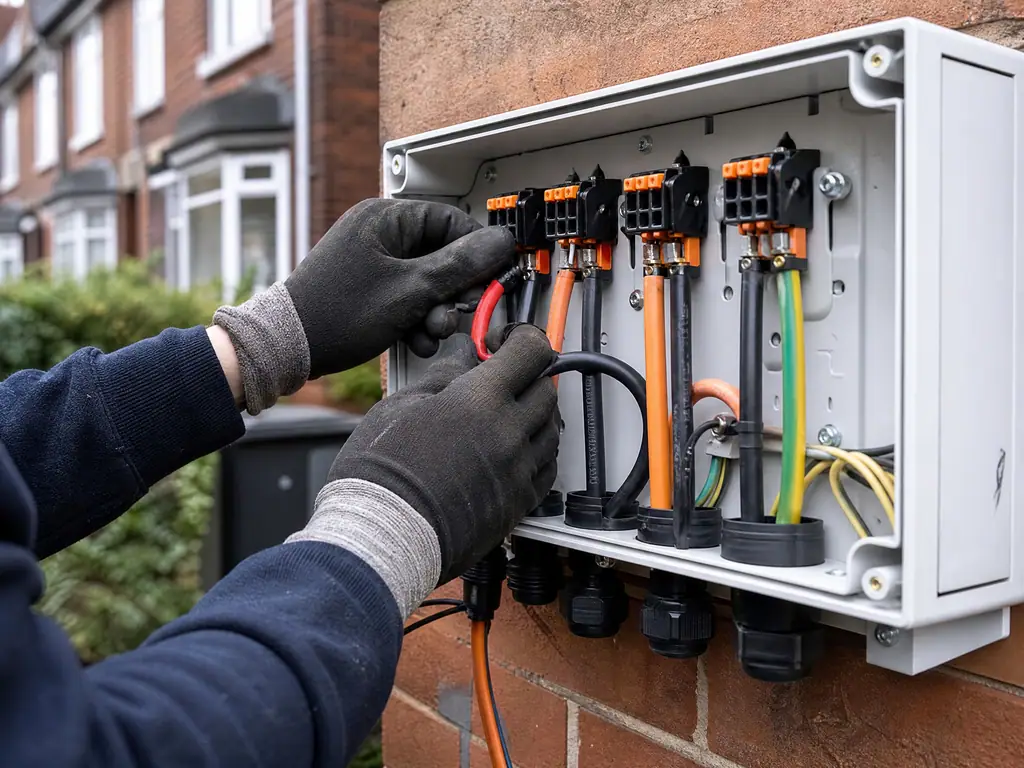
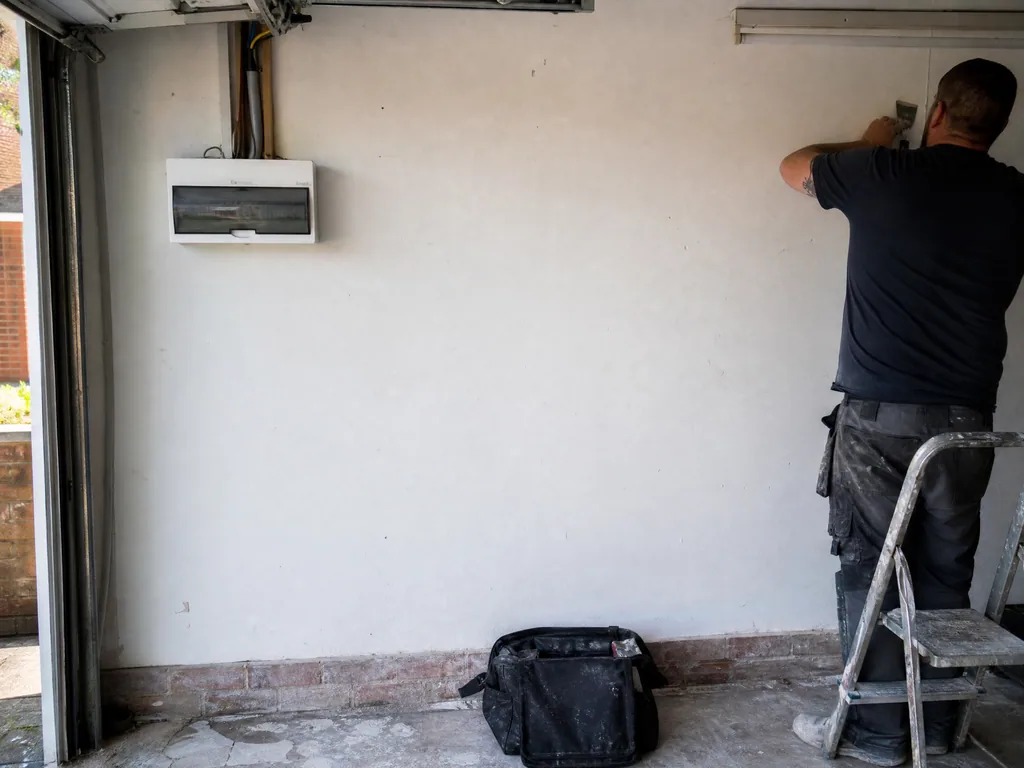
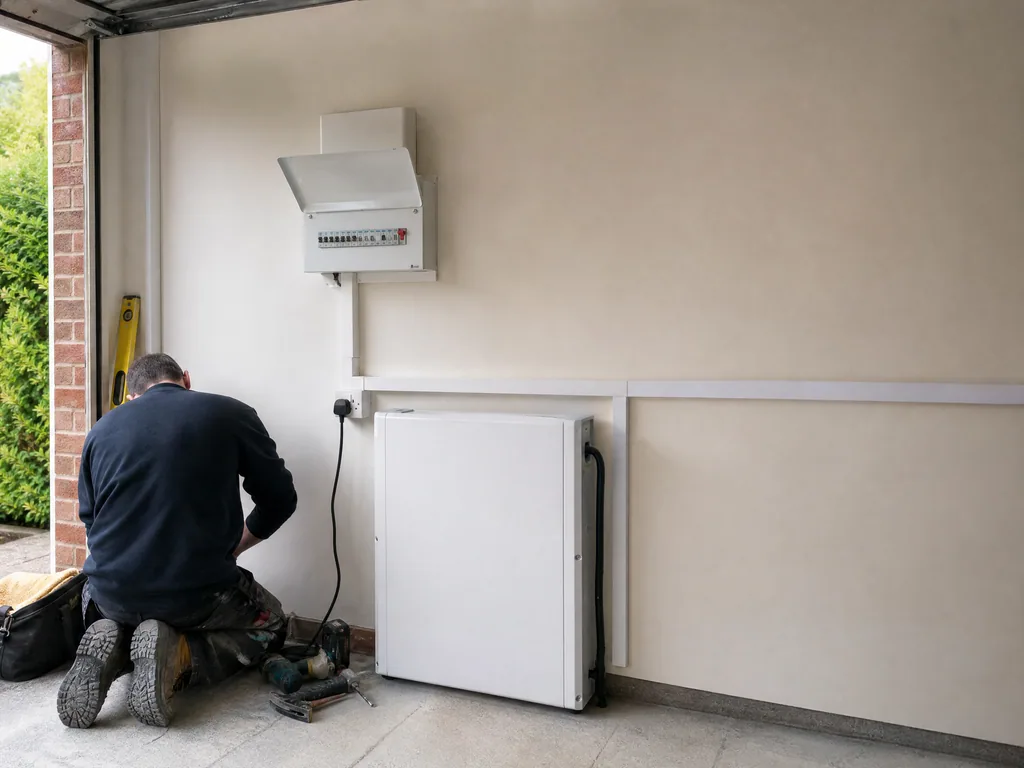
Illustrative photos of the methods and finish described on this page. They are not records of particular customers' jobs.

  • Home solar battery mounted in a utility room, Birmingham
    Home solar battery mounted in a utility room
  • Electrician connecting the cables to a home solar battery, Birmingham
    Electrician connecting the cables to a home solar battery
Garage wall before a home battery was fitted, Birmingham
Before: Garage wall before a home battery was fitted
The same garage wall with a home battery fitted, Birmingham
After: The same garage wall with a home battery fitted

Want to know what size battery suits your home?

Send a recent bill and we will tell you what makes sense, free.

Lines open Monday to Sunday, 9am to 7pm.

Where we work

Where we work in Birmingham and the West Midlands

Based at B23 6RP in north Birmingham, we work across Birmingham and the West Midlands. These towns have their own local pages:

Questions

Solar Battery Storage: common questions

How much does solar battery storage cost in Birmingham?

Checkatrade lists solar battery storage in Birmingham at £4,240 to £7,207, with an average of £5,503. The Energy Saving Trust puts the full range at £1,500 to £10,000, with a 5 kWh system at around £4,600. Installation in homes is VAT-free until 31 March 2027.

What size battery do I need?

It depends on how much you use after the sun goes down, not on the size of your house. The Energy Saving Trust says a typical home system might be 10 kWh. A household that is out all day and uses most of its power in the evening gets more from a battery than one that is at home in the daytime.

Can I add a battery to solar panels I already have?

Usually, yes. Your existing inverter decides whether the battery connects on the AC side or through a new hybrid inverter. Adding a battery to existing solar panels explains both, including what to do if you are on a Feed-in Tariff.

Where does the battery go?

Somewhere dry with room around it, usually a garage, utility room or understairs cupboard. The Energy Saving Trust gives a typical battery as about 100 by 60 by 25 centimetres. The survey agrees the spot with you before anything is ordered.

Do you cover my part of West Midlands?

We are based at 115 Sutton New Rd in north Birmingham and cover Birmingham, including Solihull, Walsall, Sutton Coldfield, Tamworth and Lichfield, plus Wolverhampton, Coventry, Dudley, West Bromwich, Nuneaton, Redditch, Halesowen, Stourbridge, Kidderminster, Bromsgrove, Oldbury, Smethwick, Rowley Regis and Willenhall. Lines are open Monday to Sunday, 9am to 7pm. Call 0121 330 1151 with your postcode and we will confirm. All areas we cover.

Are you open 24 hours?

No. Lines are open Monday to Sunday, 9am to 7pm. If your system smells of burning, shows scorch marks or crackles, keep people away from it and call 999 if there is smoke or fire. Anything else, from a dead inverter to a drop in output, can wait for a call in opening hours.

Related

Related services

  • Adding a Battery to Existing Solar Panels

    Already have panels? A compatibility check on your inverter and meter, then an AC or DC coupled battery that leaves any Feed-in Tariff arrangement intact.

    View service
  • EV Charger Installation

    Home EV chargers fitted on their own or wired to work with your solar, so the car can charge from your own generation.

    View service
  • Solar Panel Maintenance

    Servicing and inspection for any installer's system: connections, isolators, inverter health and output checked, with written findings.

    View service

Keep your solar power for the evening.

Call for a free battery quote, or send your postcode and we will ring you back.

Lines open Monday to Sunday, 9am to 7pm.

Call 0121 330 1151