Last updated:
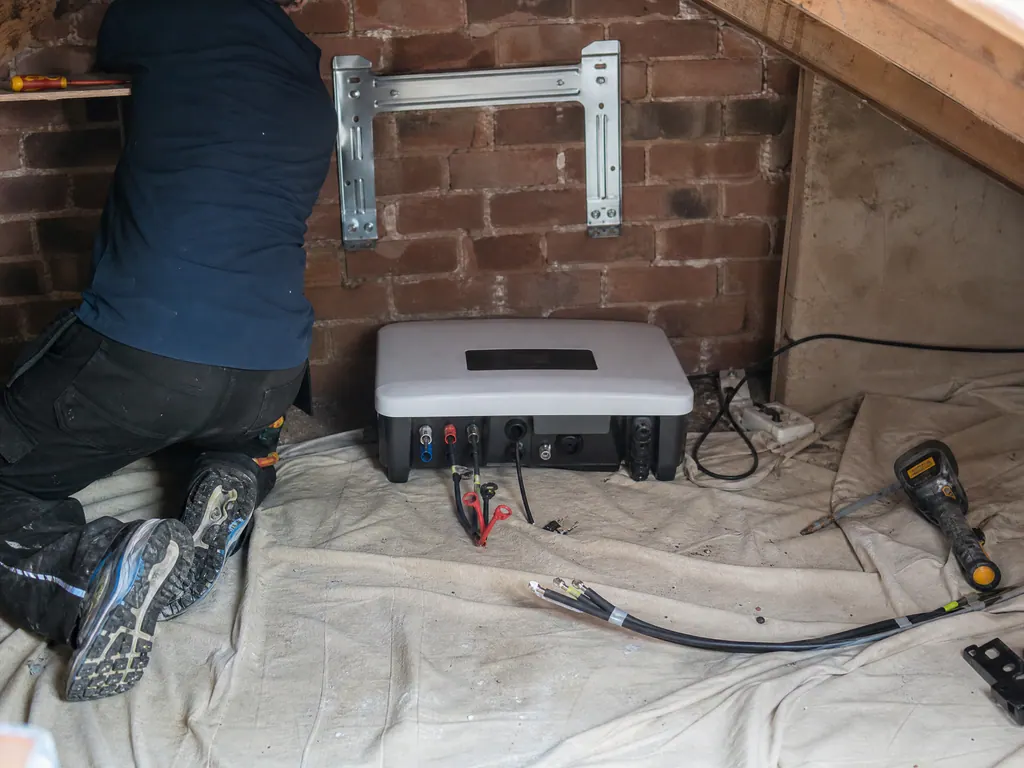
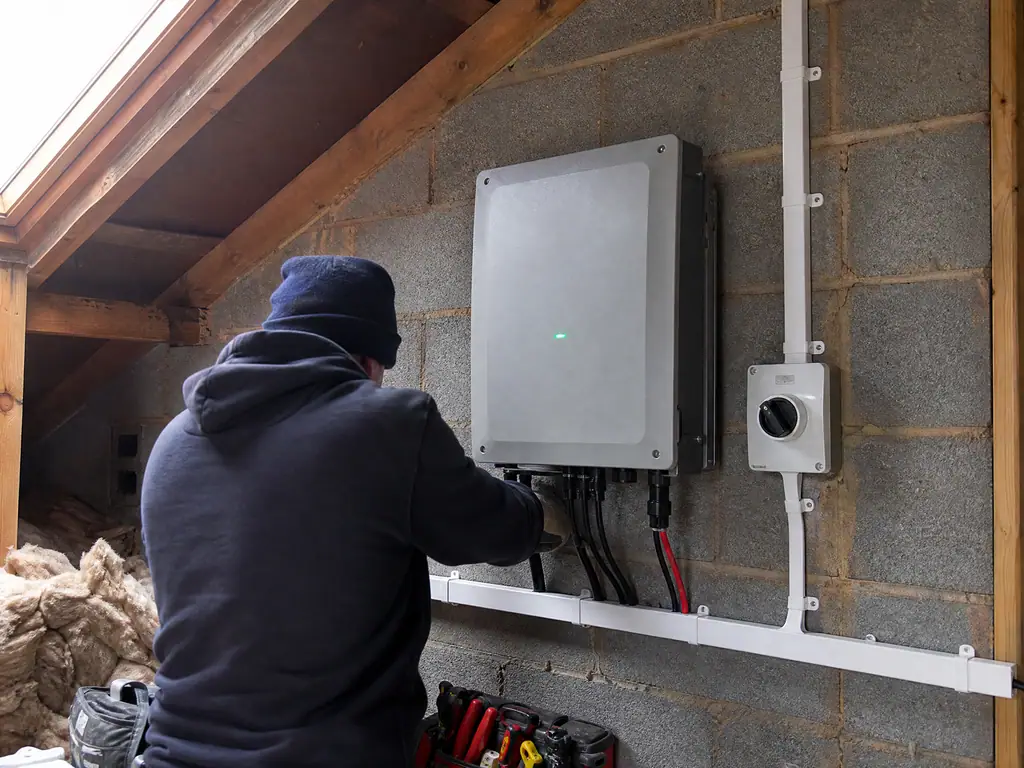
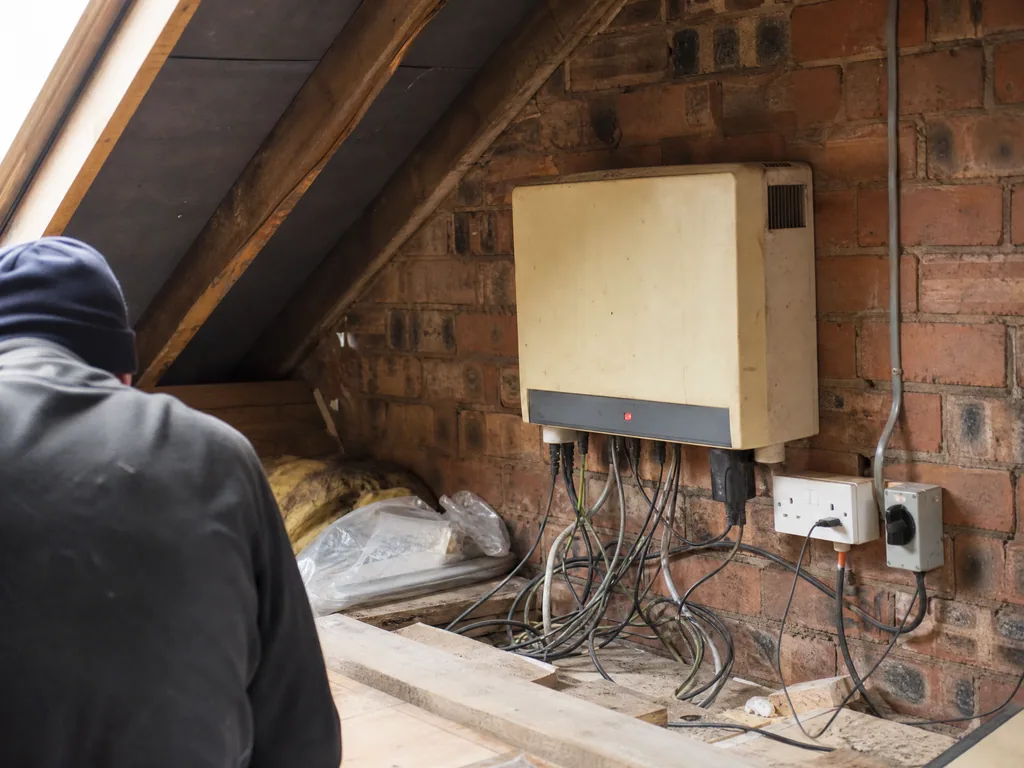
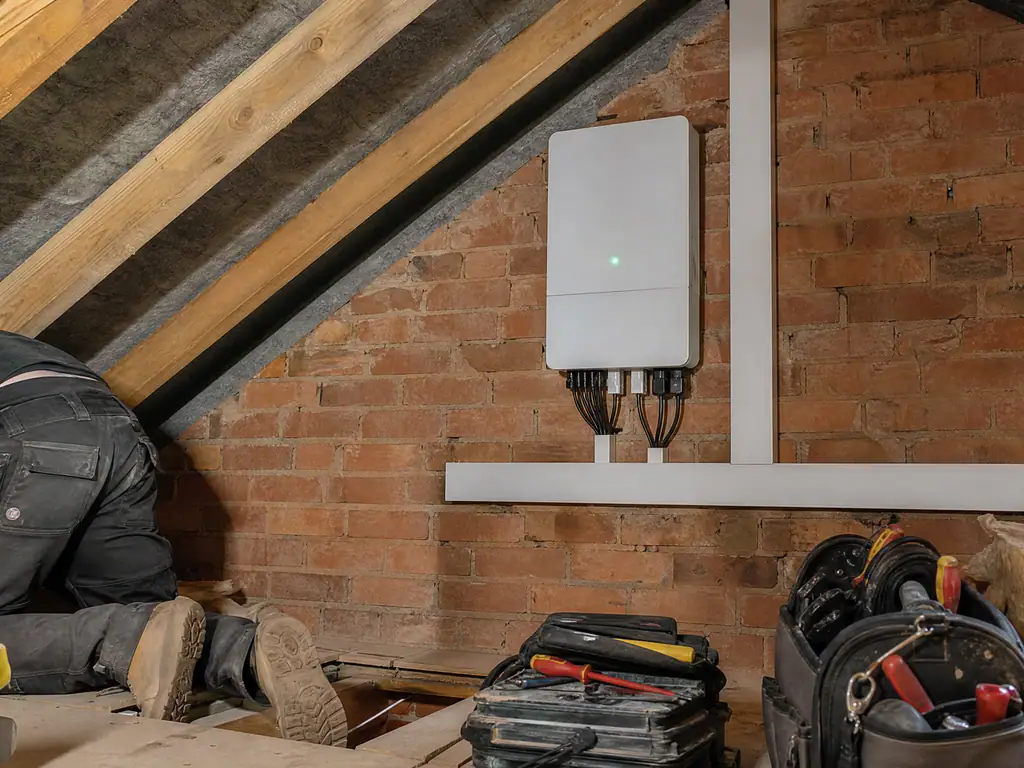
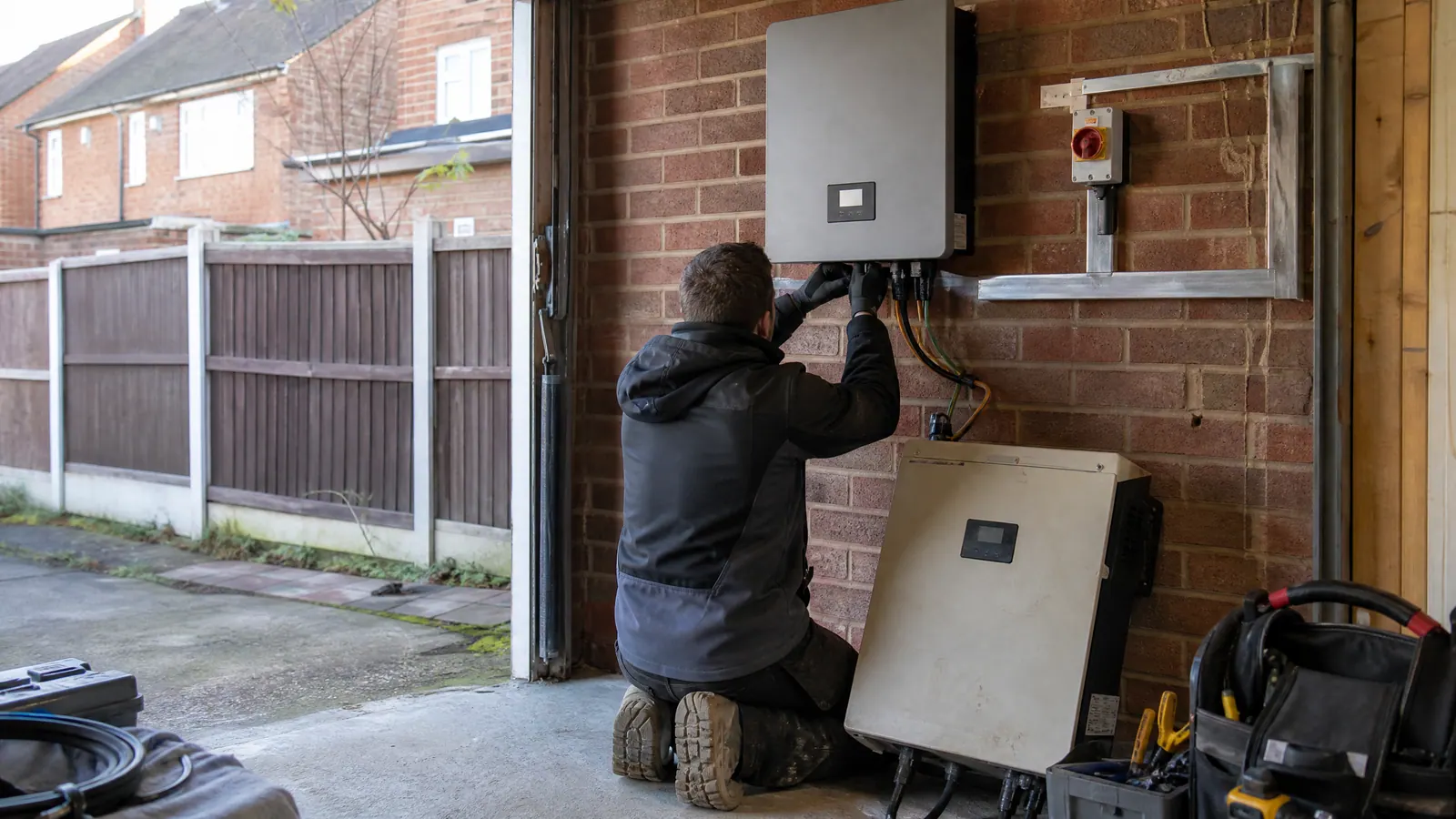
Solar inverter replacement in Birmingham is the most common big repair on an older system. The inverter turns the DC power from your panels into the AC power your home uses. When it fails, the whole system stops generating, even though the panels on the roof are fine.
The Energy Saving Trust says panels should last 25 years or more, while an inverter needs replacing after around 12 years. A system fitted before 2014 is now at that age. A new inverter usually gets them back to full output for a fraction of the cost of a new system.
Make sure it’s the inverter
A blank screen doesn’t always mean a dead inverter. A tripped solar breaker in the consumer unit, a failed DC isolator or a damaged connector can look exactly the same from the ground. So the first job is to confirm the fault, by checking the supply to the inverter and measuring what the panel strings are delivering. It would be a waste to replace a working inverter. Solar panel repair covers the other faults.
Like-for-like or hybrid
A like-for-like replacement matches the power rating of the old inverter and suits the existing strings. It is the cheapest route back to generating.
A hybrid inverter does the same job and can also run a battery, now or later. If you think you might add storage, fitting a hybrid at this point saves buying a second inverter down the line. Solar battery storage explains how batteries are sized.
Either way, the new inverter is matched to the voltage and current of your panel strings, and a system on a Feed-in Tariff keeps its generation meter exactly as it is. If the change affects what the system can export, National Grid Electricity Distribution is notified under the G98 or G99 rules.
What it costs
Checkatrade gives £800 to £1,000 for an inverter replacement, depending on the model. Homeowners discussing their quotes online report figures in the same range, such as £885 before VAT and £700 to £1,000. A hybrid inverter costs more. Before you pay, check the warranty: the Energy Saving Trust says most inverters have at least five years’ cover, and many are extended to 15.
If your installer has gone
A replacement doesn’t need the original installer. If they have closed, keep the paperwork you have. What happens if your solar installer goes out of business? explains how warranties and your MCS certificate work in that case. Buying a house with an inverter that has stopped? Buying a house with solar panels covers what to ask for before you exchange.
What's included
- Inverter fault confirmed before anything is replaced
- Panel strings tested so the new inverter is matched to them
- Like-for-like or hybrid option explained, with prices
- Old inverter removed and disposed of
- New inverter fitted, wired and commissioned
- Monitoring set up on your phone
- Feed-in Tariff meter left untouched
- Generation checked once the system is back on
How the options compare
Generation
- Leave it off
- None until it's fixed
- Cheapest inverter going
- Back, if it suits the strings
- Matched to your system
- Back, with the strings checked
Battery later
- Leave it off
- No
- Cheapest inverter going
- Usually not
- Matched to your system
- Hybrid option if you want one
Warranty
- Leave it off
- None
- Cheapest inverter going
- Varies
- Matched to your system
- Manufacturer warranty on the new unit
Feed-in Tariff
- Leave it off
- No generation, so no payments
- Cheapest inverter going
- Depends on the wiring
- Matched to your system
- Generation meter left as it is