Last updated:
You can add a battery to existing solar panels on most systems, whoever fitted them and however old they are. The battery stores what the panels make during the day so you can use it in the evening instead of exporting it. What needs checking first is the inverter, the meters and, if you have one, your Feed-in Tariff arrangement.
AC coupled or DC coupled
There are two ways to connect a battery to an existing system.
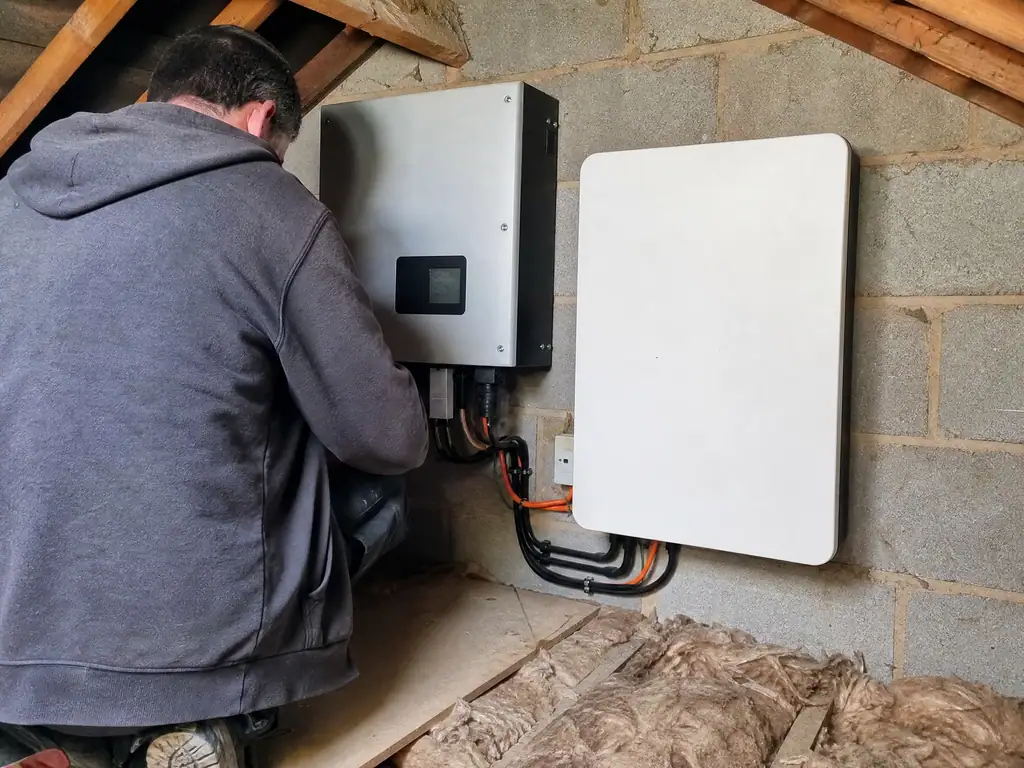
An AC-coupled battery has its own inverter and connects on the house side of your existing solar inverter. The panels and their inverter carry on exactly as before, which makes it the usual choice for older systems and for systems on a Feed-in Tariff.
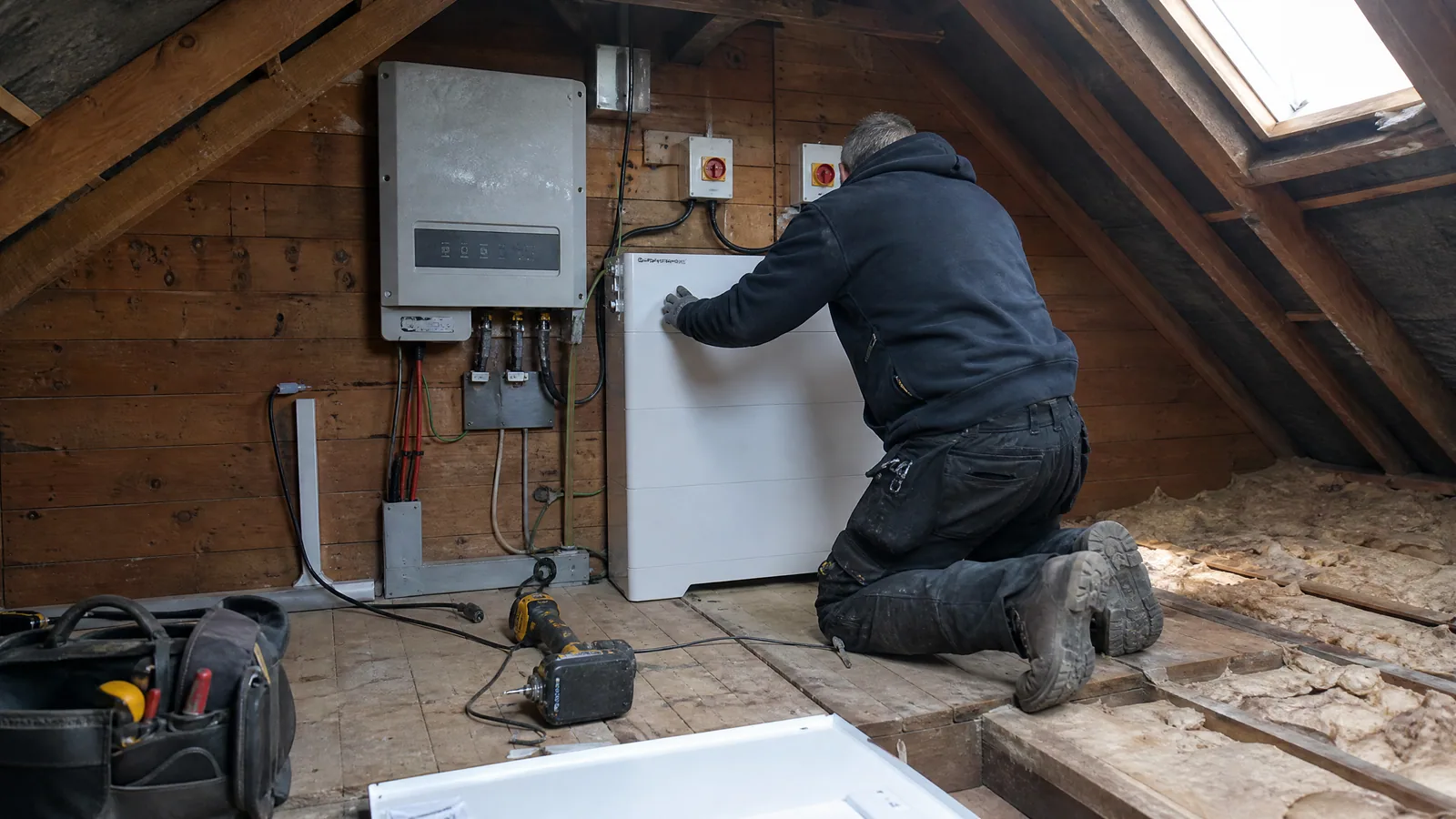
A DC-coupled battery shares a hybrid inverter with the panels. That means replacing the existing inverter. It makes most sense when the old inverter is near the end of its life anyway. The Energy Saving Trust says an inverter needs replacing after around 12 years, so a system from the mid-2010s is a good candidate. Solar inverter replacement covers that side of the job.
Your Feed-in Tariff
The Feed-in Tariff closed to new applicants in March 2019, but the Energy Saving Trust says existing contracts run for 20 to 25 years, so plenty of Birmingham systems are still being paid. Adding a battery doesn’t have to change that.
Ofgem’s guidance on storage says the change should be reported to your FIT supplier. Generation payments carry on where the generation meter still measures only what the panels produce. That holds if the meter sits between the panels and the battery, if the battery is set so it can’t charge from the grid, or if the meter is an approved two-way meter that shows the solar generation on its own. Does adding a battery affect your Feed-in Tariff? goes through each arrangement.
Sizing the battery
The right size comes from your evening and overnight use, not the size of the array. The Energy Saving Trust says a typical home battery might be 10 kWh. PVGIS shows why bigger isn’t always better: a 4 kWp south-facing system in Birmingham makes about 476 kWh in July but only 136 kWh in December, so a very large battery will sit part-empty through the winter. Solar battery storage explains sizing in more detail.
Costs
Checkatrade lists Birmingham battery installs at £4,240 to £7,207. The Energy Saving Trust puts a 5 kWh system at around £4,600. If the inverter needs replacing as part of the job, add that to the battery price. Home installation is VAT-free until 31 March 2027. The cost guide has the full picture.
If you have just bought a house with panels, check the paperwork before planning a battery. Buying a house with solar panels lists what to ask the seller for.
What's included
- Your existing inverter, panels and age of system checked
- Generation and export meter arrangement recorded
- Feed-in Tariff status confirmed, if you have one
- AC or DC coupling recommended, with the reasons
- Battery sized from your evening use
- Installation, set-up and monitoring app
- Paperwork for your FIT supplier where needed
- Registration with National Grid Electricity Distribution
How the options compare
Feed-in Tariff
- Leave it
- Carries on as now
- Battery with no checks
- Payments can be put at risk by the wrong meter set-up
- Checked and planned
- Meter arrangement kept within Ofgem's rules
Old inverter
- Leave it
- Carries on until it fails
- Battery with no checks
- Ignored
- Checked and planned
- Checked, and replaced with a hybrid if it's near the end
Evening power
- Leave it
- Bought from the grid
- Battery with no checks
- Stored
- Checked and planned
- Stored
Paperwork
- Leave it
- None
- Battery with no checks
- Easy to miss
- Checked and planned
- FIT supplier and network operator told